Breathability is one of the most critical performance factors in waterproof fabrics, membranes, and technical materials.
Whether used in outdoor apparel, footwear, medical textiles, or industrial protective products, breathability directly affects comfort, moisture management, and long-term usability.
To evaluate performance accurately, manufacturers rely on standardized breathability metrics. Understanding how these metrics work, and what they actually measure, helps engineers, designers, and buyers select the right material for their application.
What Are Breathability Metrics?
Breathability metrics are standardized measurements used to evaluate how effectively a material allows moisture vapor to pass through it.
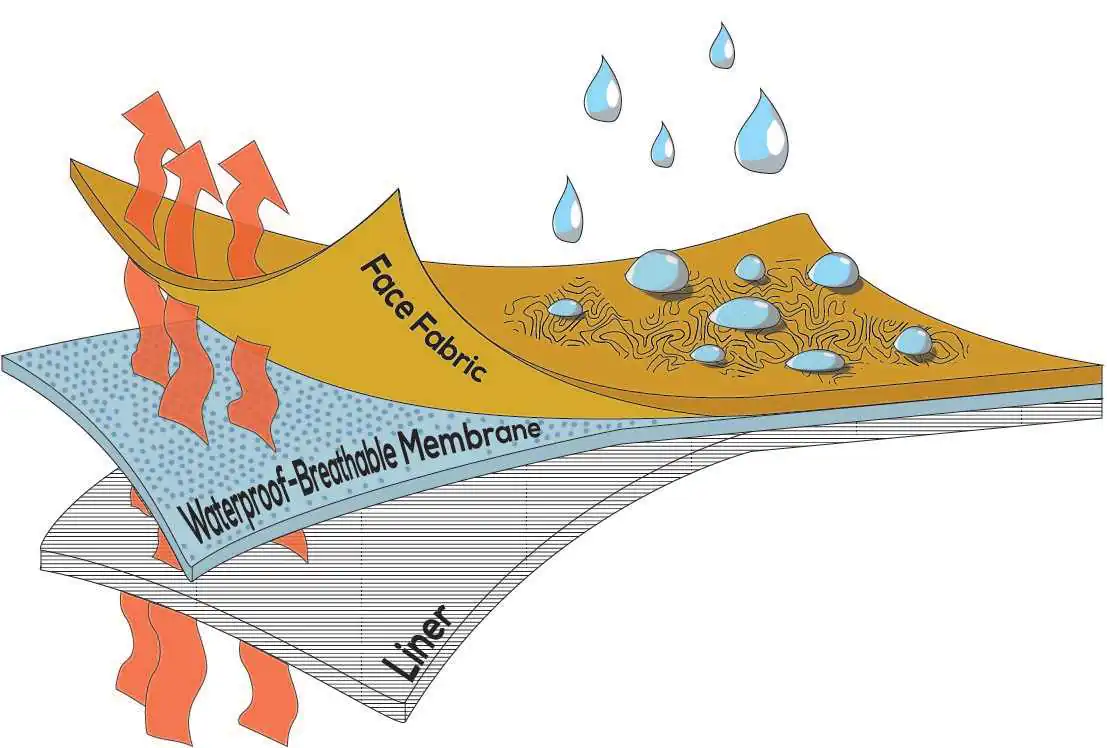
While waterproof materials block liquid water, breathable materials allow sweat vapor and internal moisture to escape.
This balance between water resistance and vapor transmission is essential in applications where both protection and comfort are required.
Breathability is not a single universal value. Instead, it is measured using different testing methods that quantify moisture vapor transmission under controlled conditions.
Main Methods for Measuring Breathability
There are several recognized test standards used globally to measure breathability performance. The most common include:
1. MVTR (Moisture Vapor Transmission Rate)
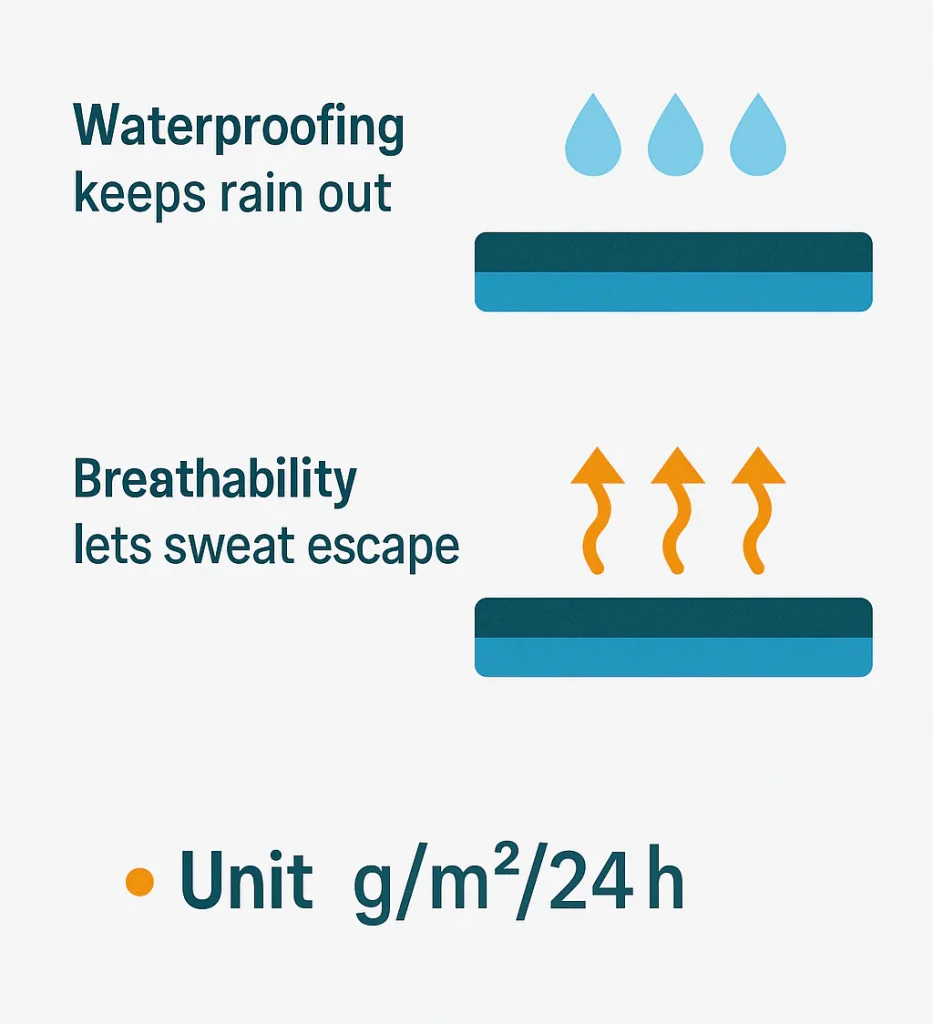
MVTR is the most widely used breathability metric. It measures how much water vapor passes through a material over a 24-hour period.
- Unit: grams per square meter per 24 hours (g/m²/24h)
- Higher value = greater breathability
For example:
- 3,000 g/m²/24h → moderate breathability
- 5,000–10,000 g/m²/24h → good breathability
- 15,000+ g/m²/24h → high-performance breathability
MVTR testing can be conducted using upright cup, inverted cup, or desiccant methods, depending on the standard (such as ASTM or JIS methods).
2. RET (Resistance to Evaporative Transfer)
RET measures how resistant a fabric is to moisture vapor transfer rather than how much vapor passes through.
- Unit: m²·Pa/W
- Lower value = better breathability
Typical RET classifications:
- RET < 6 → extremely breathable
- RET 6–13 → very breathable
- RET 13–20 → moderate
- RET > 20 → low breathability
RET is often preferred in high-performance apparel evaluation because it better simulates real wearing conditions.
3. Air Permeability Testing
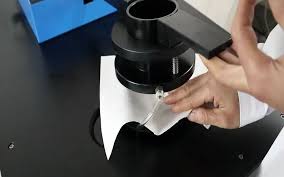
Air permeability measures how much air passes through a fabric under pressure.
- Unit: cubic feet per minute (CFM) or L/m²/s
- Higher value = more airflow
However, air permeability is different from moisture vapor transmission. Some waterproof membranes may have low air permeability but still offer high vapor transmission.
Factors That Influence Breathability Results
Breathability metrics can vary significantly depending on multiple structural and environmental factors. Each of the following elements directly impacts how moisture vapor moves through a material:
- Membrane Structure (Microporous vs Monolithic)
Microporous membranes use tiny pores to block liquid water while allowing vapor to escape, and performance depends on pore size and distribution. Monolithic membranes have no pores and rely on molecular diffusion to move moisture through the material. The structural design directly impacts MVTR and RET results. - Film Thickness
Thinner films generally allow faster vapor transmission because moisture travels a shorter path. However, very thin membranes may sacrifice durability. Thicker films improve strength but can slightly reduce breathability. - Lamination Method
The bonding process between membrane and fabric affects how easily vapor moves through the structure. Excess adhesive or improper lamination can block vapor pathways. Controlled lamination helps maintain targeted breathability metrics. - Temperature and Humidity During Testing
Breathability results depend heavily on test conditions. Higher humidity and temperature differences usually increase vapor transmission rates. Consistent lab standards are essential for accurate comparison. - Surface Fabric Construction
The outer textile layer influences how moisture spreads before passing through the membrane. Dense or coated fabrics may slow vapor release, while engineered constructions can enhance moisture dispersion.
Because of these variables, breathability metrics should always be interpreted within the context of the complete laminated structure, not just the membrane alone.
Why Breathability Metrics Matter and How to Choose the Right Level
For manufacturers, breathability metrics are more than just numbers, they directly influence product positioning, target markets, user comfort, durability, and overall brand reputation.
Accurate testing supports quality control, reduces warranty risks, and helps communicate performance clearly to customers.
When selecting the appropriate breathability level, manufacturers should evaluate:
- End-use environment (active sports vs static protection)
- Expected sweat generation and moisture load
- Required waterproof rating
- Durability expectations
- Cost-performance balance
By aligning breathability metrics with real-world application demands, manufacturers can ensure both technical performance and long-term product reliability.
Breathable TPU Membranes and Performance Films
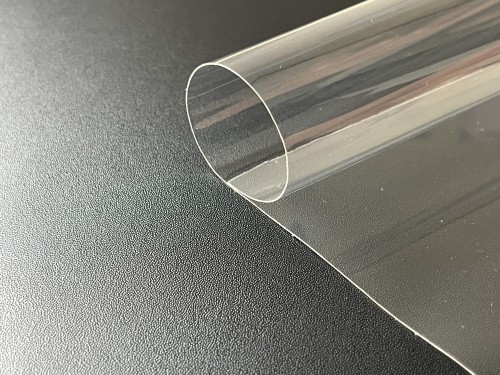
Modern TPU membranes and technical films are engineered to deliver controlled moisture vapor transmission while maintaining waterproof integrity.
By adjusting polymer formulation, thickness, and lamination processes, manufacturers can fine-tune MVTR and RET values to match specific product requirements.
High-performance breathable membranes are widely used in:
- Outdoor jackets and footwear
- Protective workwear
- Medical mattress covers and hygiene products
- Industrial protective fabrics
Advanced Breathable Film Solutions from BlueSign Materials
BlueSign Materials develops high-performance TPU membranes and breathable films engineered to meet precise breathability metrics and waterproof standards.
Our solutions are designed for manufacturers seeking reliable moisture management, durability, and customizable performance levels.
If you need breathable membrane solutions tailored to your application, contact BlueSign Materials to explore advanced material options built for modern performance demands.